Draft Punk - Fantasy Football
Josh ClemmSports
4.61.46K Reviews
- Version
- 26.0.0
- Installs
- 100.00K
- Age Rating
- Everyone
Screenshots
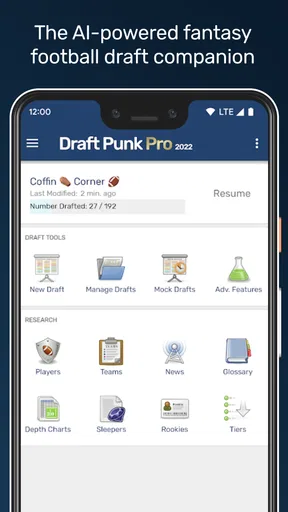
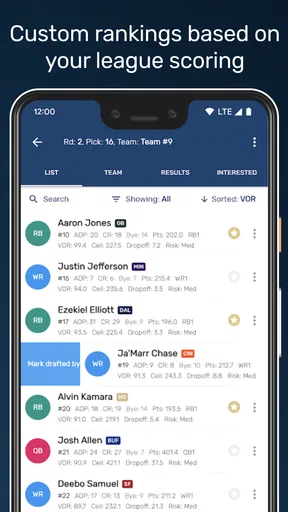
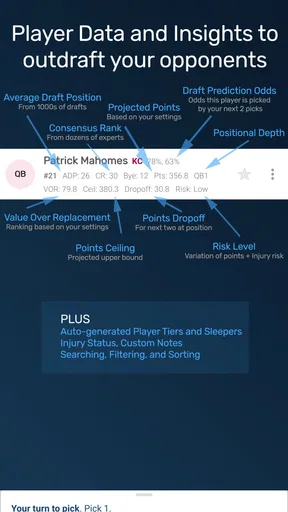
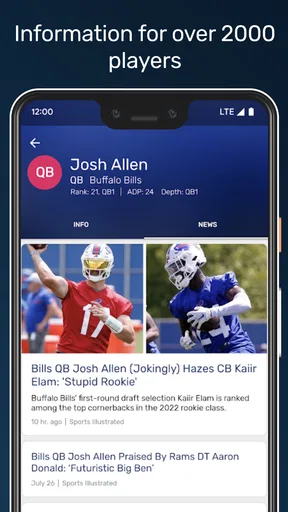
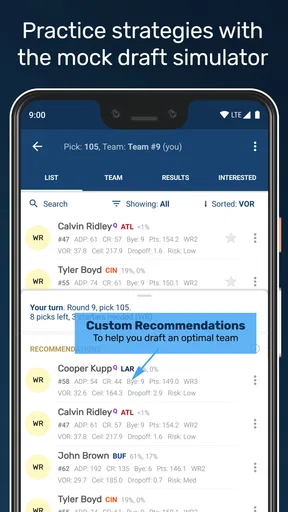
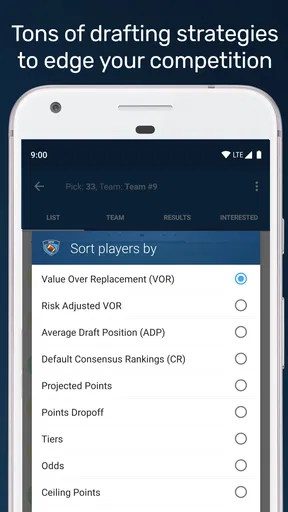
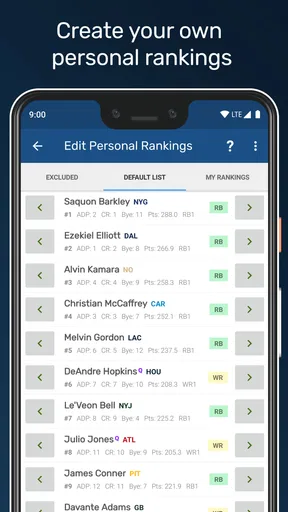
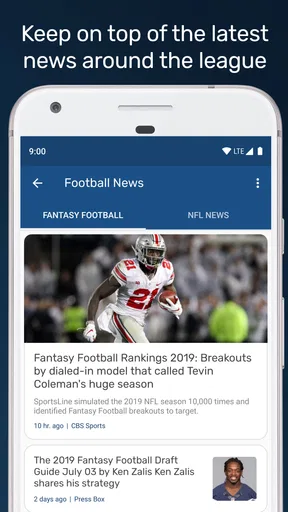
Our Review of Draft Punk - Fantasy Football
 Analysis by Appyee
Fantasy football drafts can become noisy very quickly. Everyone arrives with rankings, opinions, injury concerns, and a plan that often changes as soon as the first few picks disappear. Draft Punk - Fantasy Football takes a focused approach to that problem: it is a sports app built as a draft companion, with AI intended to help me make better selections while my league is moving quickly.
After spending time with it, I see the app less as a replacement for fantasy-football knowledge and more as a second set of eyes. Its value is clearest when I already understand my league but need help staying disciplined under pressure. Instead of trying to turn the entire hobby into an automated experience, it concentrates on the moment when decisions matter most: the draft room.
That narrow purpose is a strength. It also creates the app’s main limitation. If you want a full fantasy league manager, live team tracking, or a broad season-long analytics suite, this is not the kind of tool I would choose first. If your main concern is making smarter draft decisions without constantly switching between several resources, it is much easier to appreciate.
How the AI draft companion changes the decision
The important capability here is the AI assistance during drafting. In practical terms, the app is designed to help me evaluate the next pick rather than simply hand me a static list and leave me alone with it. That distinction matters because a draft is not a normal research session. The best available player before the draft may not be the best choice after several positions have already been filled.
I found the idea most useful when I treated the recommendations as a live checkpoint. Before selecting, I could pause and ask myself whether I was reacting to the previous pick, chasing a name, or ignoring a weakness in my roster. The AI layer encourages that pause. It gives the draft a more structured rhythm, especially when the room starts making unexpected choices.
The real benefit is decision discipline, not magic prediction. No assistant can remove uncertainty from fantasy football, and I would not use this app expecting every recommendation to become a winning player. What it can do is reduce impulsive drafting and make it easier to compare the choice in front of me with the needs of the roster I am building.
That makes the app especially interesting for people who know enough to have opinions but not enough to trust every opinion they have in the heat of the moment. Experienced players can use it as a challenge to their assumptions. Newer players can use it as a guide through a process that otherwise feels intimidating.
Why a draft-focused tool feels different from ordinary rankings
A conventional ranking sheet is useful before the draft begins, but it becomes less complete with every selection. A player’s value depends on who is still available, how many roster slots remain, and what the other managers are doing. A simple list does not naturally explain those changing conditions.
Draft Punk is more appealing when I think of it as a context tool. I am not only asking, “Who is ranked highest?” I am asking, “What should I do now, given the shape of my team and the direction of the room?” That is a more useful question, and it is where an AI companion can potentially save me from making a familiar mistake.
There is also a psychological advantage. When a draft goes differently from my preparation, I tend to overcorrect. One manager takes a player I expected to get later, and suddenly I want to reach for someone else. Having a dedicated assistant nearby gives me a reason to slow down. Even when I disagree with the suggestion, the disagreement is more productive than an emotional reaction.
I would not describe that as a substitute for research. It is closer to a decision filter. The app is strongest when I bring my league settings, preferences, and basic football knowledge to the process, then use the recommendations to test whether my next move makes sense.
Using it in a real draft
A realistic use case is a busy evening when I am drafting from home, following several conversations at once, and trying not to let the timer run down. I might begin with a broad plan for balancing positions. Then another manager takes an early player I expected to target, and two more managers start selecting from the same position group. This is exactly when a static cheat sheet becomes harder to interpret.
In that situation, I would use the app as a quick reset. Rather than scrolling through multiple websites or searching for a fresh opinion, I could check the AI guidance, compare it with my roster, and decide whether the apparent value is actually useful for my build. The practical advantage is not necessarily speed alone. It is having the relevant question in front of me when the draft becomes messy.
One useful workflow is to decide on a roster priority before consulting the recommendation. For example, I might determine that I need to address a missing position or preserve flexibility for later rounds. Then I can see whether the suggestion supports that plan. This prevents the assistant from becoming an excuse to abandon a sensible strategy every time a highly recognizable name appears.
A second workflow is to use disagreement as a warning signal. If the AI points toward a player I had dismissed, I would not automatically follow it. I would investigate why the recommendation differs from my expectation and decide whether the difference comes from roster balance, draft value, or a blind spot in my own preparation. That turns the app into a learning tool rather than a button I press without thinking.
A third practical tip is to keep a personal limit on how often I reconsider a pick. Drafts punish endless hesitation. The app is most helpful when it supports a repeatable routine: check the situation, review the suggestion, consider the roster, and make the selection. If I keep reopening the same decision, the extra information becomes noise.
This is also where the app’s mobile format makes sense. A draft companion needs to fit beside the main fantasy experience rather than demand a long reading session. I would still prepare before the draft, but I would want the app available for those moments when the plan needs adjusting. Its role is tactical and immediate.
What I would prepare before opening the app
I would not enter a draft relying on the AI alone. First, I would learn the scoring settings and roster requirements of the league. A recommendation can only be useful when I understand what my league rewards. I would also decide how much risk I am willing to accept and whether I prefer a balanced roster or a more aggressive approach.
That preparation makes the assistant easier to judge. Without it, a newer player may interpret every suggestion as an instruction. With it, the same suggestion becomes one input among several. The difference is important because fantasy football involves uncertainty, changing player situations, and personal tolerance for risk.
I would also keep my own short list of players or positions I do not want to ignore. This is not about fighting the app. It is about preserving context that an automated recommendation may not capture in the way I expect. A draft companion should support my strategy, not erase it.
The strongest scenario for Draft Punk
The best fit is a live draft where I want help making choices but do not want to spend the entire session juggling several browser tabs, articles, and ranking tools. It is particularly useful for a casual league that matters enough to take seriously, but not enough for me to build a complicated spreadsheet and update it constantly.
I can also see value for an experienced player returning after a break. Fantasy formats evolve, and it is easy to remember old habits more clearly than current draft conditions. An AI companion can provide a structured way to re-enter the process. It gives the player something to consult while rebuilding confidence, without requiring a complete course in fantasy analysis.
Another strong scenario is a league with friends where the draft is social and distracting. I may be chatting, watching the room, and trying to make a pick before the clock becomes uncomfortable. In that environment, the app’s focused purpose is more useful than a large research platform filled with information I do not have time to process.
It can also help a manager who tends to draft emotionally. Some people always take a favorite player too early. Others panic after a run on quarterbacks, running backs, or wide receivers. The assistant cannot change those habits by itself, but it can make the moment visible. A recommendation that conflicts with my instinct may prompt me to ask whether I am following a plan or simply reacting.
For a first-time fantasy player, I would use it alongside a basic explanation of roster construction and scoring. It can reduce the feeling of being lost, but it should not be treated as a complete lesson. The app is a companion to the draft, not a replacement for understanding what the league is asking me to build.
Where the tradeoffs become noticeable
The first tradeoff is trust. AI guidance sounds reassuring, but fantasy football decisions are not certain enough for me to follow suggestions blindly. A player may look attractive in a recommendation while still being a poor fit for my roster, my league’s scoring, or my risk preference. The app helps most when I remain responsible for the final choice.
The second tradeoff is focus. A tool that concentrates on drafting can be wonderfully clear, but that also means it is not necessarily the right destination for every fantasy-football task. If my priority is managing lineups through a long season, tracking weekly performances, or researching a broad range of news, I would look for a more comprehensive fantasy platform.
There is also a learning curve in deciding how much authority to give the recommendations. New users may expect a single obvious answer every time. In reality, the useful part may be the reasoning process around the choice. I need to understand my roster and the draft context before the advice becomes meaningful. That can make the first experience less effortless than the short description suggests.
The free price makes it easy to try, which I appreciate, but the app also offers optional in-app purchases ranging from a few dollars to several dollars per item. I would approach those purchases carefully. A paid enhancement is worthwhile only if it improves the specific part of drafting that frustrates me. I would not buy extras simply because I felt pressured during a tense draft.
Another consideration is age and audience. The app carries an Everyone content rating, so it is broadly accessible from a content perspective. That does not mean every user will find fantasy football immediately understandable. Younger or completely new players may still need help with league rules, scoring, and roster decisions outside the app’s central purpose.
Finally, I would test the workflow before an important league draft. A draft tool should be familiar before the clock starts. Spending a few minutes learning where recommendations appear and how I want to consult them is more sensible than discovering the process while other managers are waiting for my pick.
When another option is better
I would choose a traditional rankings sheet when I want a simple, low-distraction reference and already have a clear strategy. A spreadsheet may be better for someone who enjoys controlling every assumption and adjusting values manually. A full fantasy platform is a better choice when the main need is season-long management rather than draft support.
I would also skip this app if I dislike algorithmic suggestions on principle or if I want to make every decision from personal scouting. The AI element is the reason to try it, so removing that from the experience removes much of the point. Likewise, a manager who enjoys extensive research may find a focused companion too narrow.
For a highly competitive league, I would use it as one reference rather than my entire preparation. Serious managers often have detailed knowledge of league-specific tendencies and custom scoring. An assistant can help organize a decision, but it should not replace the work that gives a manager an edge in an unusual format.
Who gets the most from it
The people most likely to benefit are casual and intermediate fantasy managers who want more structure during the draft. They may know the basic positions and scoring concepts, but they want help recognizing value when the available choices change. The app gives that kind of player a practical checkpoint without demanding a large research routine.
It is also a good match for managers who struggle with time pressure. If I regularly make a pick because I panic, copy the previous manager, or forget my roster plan, an AI companion can add a useful moment of reflection. That benefit is behavioral as much as analytical, and it may be more important than any individual recommendation.
Returning players can gain from the same structure. I may remember how I used to draft but not feel current enough to trust that memory. The app can serve as a bridge between old experience and a fresh draft, provided I still check the advice against the league’s rules.
The least suitable audience is the manager looking for a complete fantasy ecosystem. This is not where I would send someone whose main goal is weekly lineup management, extensive historical research, or total manual customization. It is also not ideal for anyone who wants an automated guarantee. Fantasy football remains a game of incomplete information, and the app cannot remove that uncertainty.
Compatibility, cost, and overall usability
The app is free to download, with optional purchases priced from $2.99 to $6.99 per item. It runs on Android devices using version 5.0 or later, which makes it accessible to many users with older phones as well as newer models. I would still check the app’s behavior on my particular device before relying on it in a live draft, because responsiveness matters when every pick has a time limit.
Draft Punk comes from developer Josh Clemm and has been available since August 13, 2010. Its current version is 26.0.0, and the app has passed one hundred thousand installs. Those figures suggest that it is not an abandoned experiment, while the average rating of 4.6 from around 3.7 thousand ratings indicates that many users find the concept useful.
I would read those signals as encouragement rather than proof that it will fit every league. Ratings cannot tell me how well the app matches my scoring settings or drafting style. The more relevant question is whether I want an AI-supported draft workflow. If the answer is yes, the low barrier to trying the free version makes the decision fairly easy.
My final take after using it as a draft partner
Draft Punk works because it concentrates on a specific problem: making better fantasy-football choices while the draft is changing around me. The AI capability is most valuable when I use it to slow down impulsive decisions, test my assumptions, and connect the next pick to the roster I am actually building.
I would recommend it to a friend who wants draft support without assembling a complicated collection of tools. I would explain that it is not a crystal ball and not a complete season-long manager. Its best role is the calm voice beside me when the room gets unpredictable.
The smartest way to use it is to prepare first, consult it consistently, and keep final responsibility for every selection. That approach preserves the fun and judgment of fantasy football while giving me a more organized way to handle pressure. For casual and intermediate managers, that balance is the app’s clearest appeal.
If your biggest fantasy-football problem happens during the draft rather than after it, this focused companion is worth trying. If you want total control, deep manual research, or broad league management, another tool may serve you better. For everyone in between, the free entry point and practical AI assistance make it a sensible addition to a draft-day routine.
Verdict
Strengths of Draft Punk - Fantasy Football
- Quickly create and manage fantasy football drafts on mobile.
- Useful player rankings help guide picks during live drafts.
- Supports custom league settings for different competition styles.
- Live scoring keeps you updated on team performance.
- Clean interface makes roster management easy to understand.
Limitations of Draft Punk - Fantasy Football
- Some advanced tools may require a paid subscription.
- Player data may be limited outside supported leagues or competitions.
- Draft performance depends heavily on the accuracy of projections.
- Notifications can become excessive during active game periods.
- New users may need time to learn all league settings.
Similar Picks in This Category
View All
BeSoccer: Soccer Live Score
BeSoccer apps4.3

Cricbuzz - Live Cricket Scores
Cricbuzz.com3.7

NFL
NFL Enterprises LLC2.4

Da Fit
MO YOUNG LIMITED3.6

ESPN
Disney4.5

LiveScore: Live Sports Scores
LiveScore Limited4.5
Frequently Asked Questions
What is Draft Punk - Fantasy Football, and how does it work?
Draft Punk - Fantasy Football is a companion app designed to help fantasy football managers prepare for drafts, evaluate players, and make more informed roster decisions. It typically combines player rankings, projections, draft advice, and league-specific information in one place. After selecting your fantasy format and scoring settings, you can use the available tools to compare players and plan your draft strategy more efficiently.
Is Draft Punk - Fantasy Football suitable for beginners?
Yes, the app can be useful for beginners as well as experienced fantasy football players. New users can benefit from player rankings, projections, and draft recommendations without having to research every athlete separately. However, fantasy football settings vary considerably between leagues, so beginners should still check that scoring rules, roster positions, and league format are configured correctly before relying on the app’s suggestions.
What fantasy football formats and scoring systems does the app support?
Support can depend on the current version of Draft Punk - Fantasy Football and the platform where it is installed. The app is generally intended for common formats such as standard, half-PPR, and full-PPR leagues, but users should verify the available settings before starting a draft. Custom scoring, superflex, dynasty, auction, and other advanced formats may require specific configuration or may not be fully supported.
Does Draft Punk - Fantasy Football provide live draft assistance?
Draft Punk - Fantasy Football may be used as a draft-day reference by displaying rankings, projections, player comparisons, and recommendations as picks are made. Its usefulness depends on the league settings and the information available in the app at that time. Before your draft begins, review the player pool, scoring format, and roster requirements so the advice matches your actual league rather than a default setup.
Is Draft Punk - Fantasy Football free to download, and are there in-app purchases?
The download model and available features can vary between Android and iOS, as well as between app versions. Some tools may be accessible for free, while advanced rankings, projections, draft features, or additional analysis could require a subscription or in-app purchase. Check the official store listing before downloading to confirm pricing, supported devices, account requirements, advertising, and whether any trial period automatically renews.
